Beyond the Bowl: The Scientific Necessity of Comprehensive Pet Dental Care for Ames Homeowners
Imagine if you stopped brushing your teeth today. Within days, a sticky film of plaque would coat your enamel. Within weeks, that plaque would harden into tartar. Within months, your gums would begin to recede, and bacteria would start an invisible march through your bloodstream, targeting your heart, liver, and kidneys. For many pets in Ames, IA, this isn't a hypothetical scenario—it is their daily reality. As we move into 2026, the veterinary community is seeing a paradigm shift in how we view oral health. It is no longer a cosmetic luxury or a solution for "bad breath"; it is a fundamental pillar of systemic longevity.
At Pet Medical Center, we treat the oral cavity as a window into your pet's overall health. While many owners focus on nutrition and exercise, the mouth often remains a neglected frontier of wellness. However, clinical data consistently shows that proactive Pet Dental Care can extend a dog or cat’s life by several years. In the heart of Story County, where our pets navigate humid summers and frigid Iowa winters, their immune systems need every advantage they can get. A mouth riddled with infection is a constant drain on those biological resources. This comprehensive guide will explore the technical nuances of veterinary dentistry, the hidden dangers of periodontal disease, and why professional intervention is the only way to safeguard your companion’s health.
1. The Invisible Enemy: Understanding the Pathophysiology of Periodontal Disease
Periodontal disease is the most diagnosed ailment in adult pets. By the age of three, approximately 80% of dogs and 70% of cats show some clinical signs of oral decay. But what exactly is happening beneath the gumline?
The Plaque-to-Tartar Pipeline
Every time your pet eats, bacteria, saliva, and food particles combine to form plaque. If not removed through mechanical brushing, this plaque reacts with minerals in the saliva to form calculus (tartar). This calculus provides a porous, rugged surface that allows even more bacteria to colonize. In the Ames climate, where indoor allergens and seasonal changes can already stress a pet’s mucous membranes, this bacterial load can trigger significant inflammatory responses.
Subgingival Pathogenesis
The most dangerous aspect of dental disease is what you cannot see. While yellow teeth are a sign of tartar, the true damage occurs in the "subgingival" space—the pocket between the tooth and the gum. Here, anaerobic bacteria flourish, releasing toxins that destroy the periodontal ligament and the alveolar bone that holds the tooth in place. This is a silent, painful process that most pets hide with remarkable stoicism.
Shutterstock
2. Systemic Implications: Why Oral Health is Heart Health
One of the most critical reasons we advocate for rigorous Pet Dental Care is the "oral-systemic link." The mouth is highly vascular. When gums are inflamed (gingivitis), the natural barrier between the mouth and the rest of the body is breached.
Bacteremia and Organ Damage
Every time a pet with periodontal disease chews a toy or eats kibble, bacteria are "massaged" into the bloodstream. This is known as transient bacteremia. These bacteria have a predilection for sticking to the heart valves, leading to endocarditis. They also filter through the kidneys and liver, causing micro-abscesses and chronic organ inflammation. In our 2026 wellness protocols, we often find that stabilizing a pet’s dental health results in improved bloodwork values for kidney and liver function.
Chronic Inflammation: The Silent Stressor
Chronic inflammation is an exhausting state for the body. A pet fighting constant oral infection is essentially living in a state of low-grade fever and immune overactivity. This can manifest as lethargy, which many Ames owners mistake for "just getting older." In reality, once the dental pain is resolved, many pets experience a "second puppyhood" or "kittenhood" as their energy levels surge.
3. The Professional Standard: Anatomy of a Comprehensive Oral Health Assessment and Treatment (COHAT)
Many owners ask why they cannot simply use "dental treats" or have their pet's teeth scraped while they are awake. The answer lies in the technical requirements of veterinary medicine. At Pet Medical Center, a professional dental cleaning is a complex medical procedure.
The Necessity of General Anesthesia
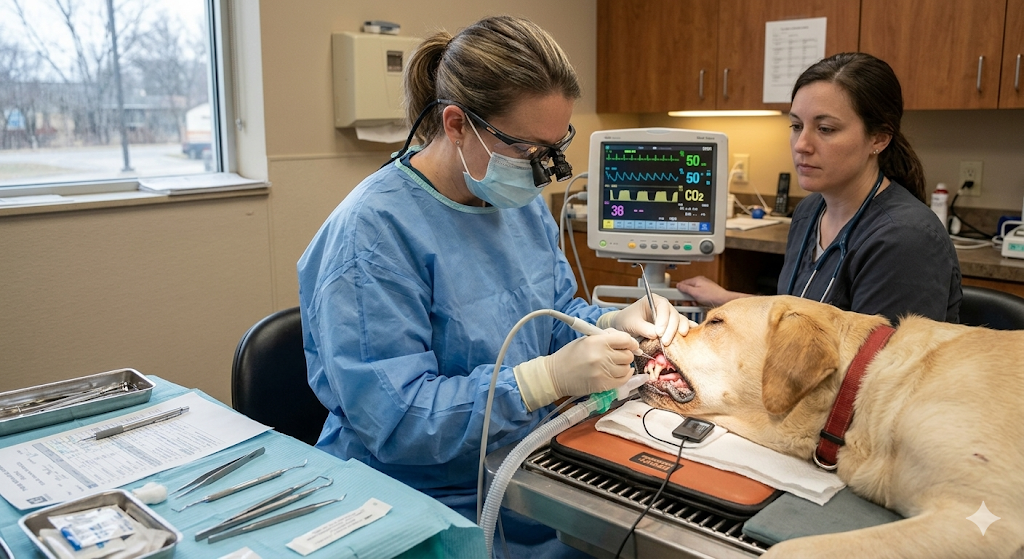
You cannot perform a thorough dental cleaning on a conscious pet. Anesthesia allows us to:
- Perform a 360-degree inspection of every tooth.
- Clean the subgingival pockets (where the disease lives).
- Take diagnostic radiographs (X-rays).
- Protect the airway from aerosolized bacteria and water.
- Ensure the pet experiences zero pain or anxiety during the procedure.
Digital Dental Radiography: Seeing the Unseen
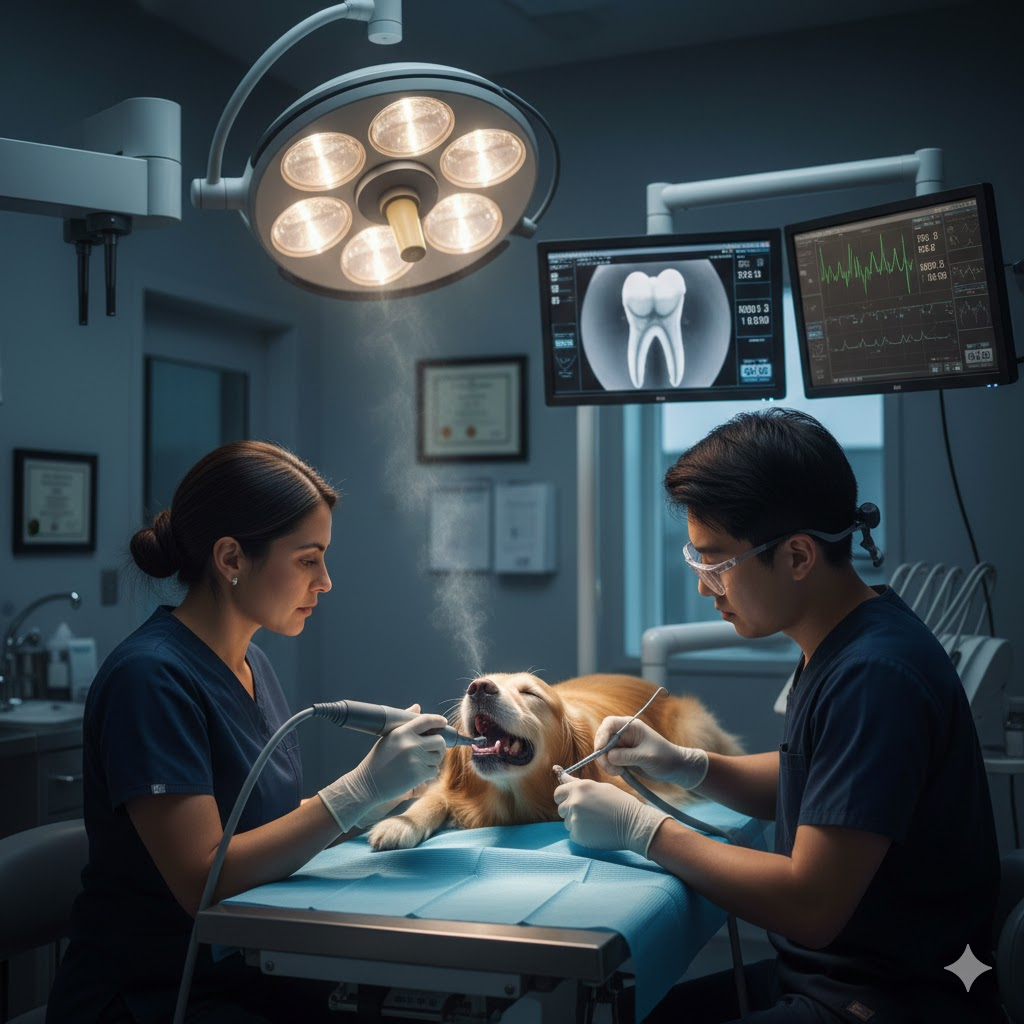
Roughly 60% of a pet's tooth is located under the gumline. Without X-rays, we are practicing "blind" dentistry. Radiographs allow us to identify:
- Root abscesses.
- Internal resorption (common in cats).
- Bone loss.
- Impacted teeth that can turn into painful cysts. At our Homepage, we emphasize that diagnostic imaging is the only way to provide a truly accurate treatment plan.
4. Identifying Pain in a Silent Species
Pets are evolutionary hardwired to hide pain. In the wild, showing weakness makes you a target. Consequently, an Ames homeowner might think their pet is fine because they are still eating. However, eating is a survival instinct; it is not an indicator of comfort.
Subtle Behavioral Cues
Homeowners should watch for these "red flags" of oral distress:
- Selective Eating: Choosing soft food over hard kibble or chewing on only one side of the mouth.
- Head Shyness: Pulling away when you try to pet their face.
- Excessive Drooling: Sometimes accompanied by a tinged pink color (blood).
- Pawing at the Mouth: As if trying to dislodge something stuck.
- "Chattering" of the Jaw: Especially common in cats with resorptive lesions.
The Smell of Decay
"Dog breath" is not normal. A healthy pet mouth should not have an offensive odor. If you notice a pungent, sweet, or rotting smell, it is a definitive sign of an active bacterial infection that requires professional Pet Dental Care.
5. Feline Dentistry: The Unique Challenge of Resorptive Lesions
Cats are not just small dogs, and their dental needs are vastly different. One of the most common and painful conditions we see in Ames cats is Feline Oral Resorptive Lesions (FORLs).
The "Cavity" That Isn't a Cavity
Unlike human cavities, which are caused by sugar and decay, resorptive lesions are a process where the body’s own cells begin to dissolve the tooth from the inside out. The enamel eventually breaks down, exposing the highly sensitive pulp and nerves.
Treatment Challenges
These lesions often start at or below the gumline. They are excruciatingly painful, yet many cats will continue to act normally until the tooth is literally crumbling. The only effective treatment for a resorptive lesion is the surgical extraction of the affected tooth to remove the source of pain.
6. The Logistics of Pet Dental Care in Ames: Climate and Lifestyle
Living in Ames, IA, presents specific challenges for pet health. Our local environment can influence how we manage oral hygiene.
Seasonal Diet Changes
In the winter months, Iowa pets are often less active, leading owners to adjust their caloric intake. This is an excellent time to focus on dental-specific diets that utilize "mechanical scrubbing" kibble technology. These diets are engineered with a fiber matrix that doesn't shatter when bitten, but instead wraps around the tooth to scrape away plaque.
Water Quality and Hydration
While Ames has high-quality municipal water, the mineral content can contribute to the speed of calculus formation in some pets. Using water additives that contain enzymes to break down plaque can be a helpful adjunct to professional care.
7. Home Care: The First Line of Defense
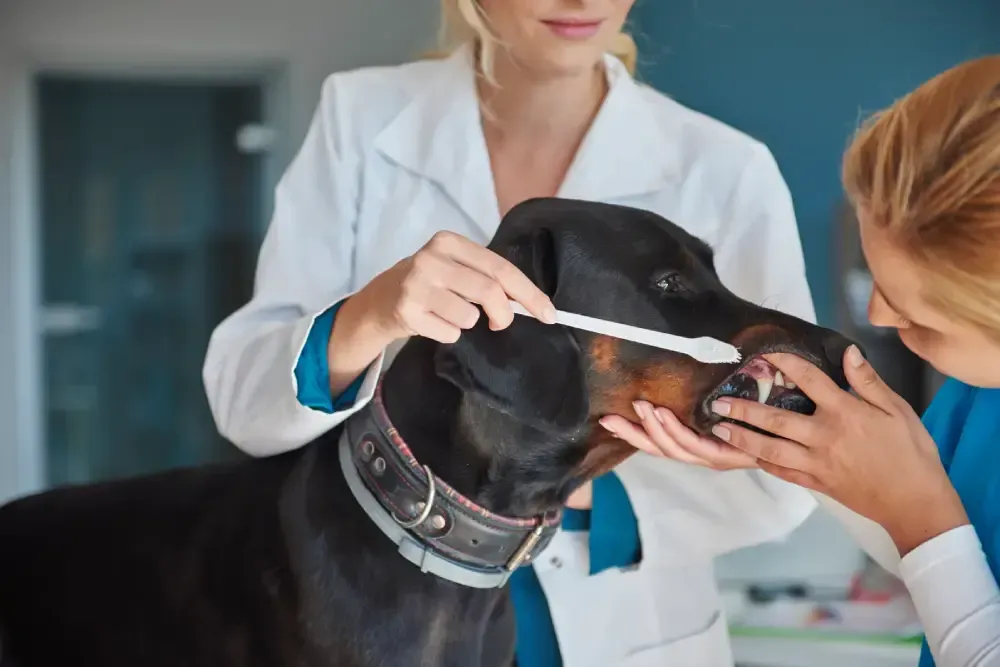
While professional cleaning at Pet Medical Center is essential to remove tartar, home care is what prevents the disease from returning.
The Gold Standard: Brushing
Nothing replaces a toothbrush. For Ames residents, we recommend starting a brushing routine as early as possible.
- Use Pet-Specific Toothpaste: Human toothpaste contains xylitol (toxic to dogs) and fluorides that shouldn't be swallowed. Pet pastes come in flavors like poultry or beef.
- Focus on the Outside: Most tartar accumulates on the cheek-side of the teeth.
- Frequency Matters: Ideally, you should brush daily. Plaque hardens into tartar within 24–48 hours.
Dental Chews and Toys
If brushing is impossible, dental chews are a secondary option. However, look for the VOHC (Veterinary Oral Health Council) seal of approval. This seal ensures the product has been clinically proven to reduce plaque and tartar. In a community like Ames, where we value evidence-based solutions, checking for the VOHC seal is a vital step for any pet owner.
8. Breed Predispositions: From Brachycephalics to Toy Breeds
Not all pets are created equal when it comes to dental risk. Your pet’s genetics play a massive role in how often they need Pet Dental Care.
The Toy Breed Trap
Yorkies, Chihuahuas, and Poodles are notorious for "crowded" mouths. When you take 42 adult dog teeth and try to fit them into a tiny skull, you get overlapping teeth that trap food and bacteria. These breeds often require professional cleanings as early as one year of age.
Brachycephalic Concerns
Breeds like Bulldogs and Pugs have "smushed" faces, leading to rotated teeth and abnormal bites (malocclusions). These abnormalities create "shelves" where tartar can accumulate at an alarming rate. Furthermore, their unique airway anatomy makes high-quality anesthetic monitoring during dental procedures even more critical.
9. The Financial Logic of Proactive Dentistry
Some homeowners hesitate at the cost of professional dental work. However, looking at the long-term economics of pet ownership in Ames, proactive care is significantly cheaper than reactive crisis management.
Prevention vs. Extraction
A routine cleaning to remove plaque and tartar is a straightforward procedure. Once the disease progresses to the point of bone loss and root rot, we must perform surgical extractions. Extractions are time-consuming, require advanced surgical skills, and increase the cost of the procedure significantly.
Avoiding Systemic Crisis
Treating heart failure or chronic kidney disease—conditions that can be exacerbated by poor oral health—costs thousands of dollars in specialist visits and lifelong medications. A yearly or bi-yearly investment in Pet Dental Care is one of the most effective ways to avoid these "catastrophic" veterinary bills.
10. Safety and Anesthesia in 2026: Modern Protocols
The number one fear owners have regarding dental work is anesthesia. In 2026, the safety protocols we use have made the risk of anesthesia lower than it has ever been in veterinary history.
Pre-Anesthetic Screening
Before any pet undergoes a dental procedure at Pet Medical Center, we perform a physical exam and bloodwork to ensure the liver and kidneys can process the anesthetic agents. We tailor the drug protocol to the specific age, breed, and health status of the pet.
Real-Time Monitoring
During the procedure, a dedicated technician monitors:
- ECG: Heart rhythm.
- Pulse Oximetry: Oxygen levels in the blood.
- Capnography: Carbon dioxide levels in the breath.
- Blood Pressure: Ensuring vital organs are being perfused.
- Body Temperature: Using heated blankets to prevent Iowa’s winter chill from affecting the pet’s recovery.
11. Frequently Asked Questions (FAQ)
Q: Can I just give my dog bones to clean their teeth? A: We strongly advise against hard bones, antlers, or nylon chews. A dog's chewing force is immense, and these hard objects are a leading cause of "slab fractures"—where a large piece of the tooth breaks off, exposing the nerve. If it's too hard to indent with your thumbnail, it's too hard for your pet’s teeth.
Q: My pet is 12 years old. Are they too old for a dental? A: Age is not a disease. A 12-year-old pet with an infected mouth is in pain every day. As long as their pre-anesthetic bloodwork is stable, senior pets often benefit the most from dental care, as it removes a major source of systemic stress.
Q: How long does the recovery take? A: Most pets are back to their normal selves within 24 hours. If extractions were performed, they might be on soft food for 10–14 days while the sutures dissolve, but their comfort levels usually improve almost immediately once the infected teeth are gone.
Q: Why does my cat have "stinky" breath even though they are young? A: This could be Juvenile Onset Periodontitis or Gingivostomatitis—an immune-mediated condition where the cat’s body is "allergic" to the plaque on their teeth. This requires early and aggressive intervention.
12. The Psychological Impact: Comfort and Temperament
Beyond the physical health benefits, there is a profound psychological component to Pet Dental Care. Chronic pain changes behavior.
Irritability and Anxiety
A pet with a toothache is more likely to be "grumpy" or reactive. We have seen numerous cases in Ames where a "mean" cat or a "snappy" dog became incredibly affectionate after their oral pain was resolved. They weren't bad pets; they were hurting.
Quality of Life
In 2026, "quality of life" is the metric we care about most. A pet that can play with their favorite ball, eat their dinner without flinching, and groom themselves comfortably is a pet that is thriving. Oral health is the foundation upon which that quality of life is built.
Conclusion: A Commitment to the Pets of Story County
Your pet’s mouth is the gateway to their entire body. By prioritizing professional Pet Dental Care, you are doing more than just freshening their breath; you are protecting their heart, supporting their kidneys, and ensuring they live a life free from silent, chronic pain. In the Ames community, we treat our pets like family, and family deserves the highest standard of medical care.
At Pet Medical Center, our goal is to partner with you to create a sustainable, effective oral health plan. Whether it is through teaching you how to brush at home or performing a high-tech surgical extraction, we are committed to the long-term wellness of your companion. Don't wait for your pet to stop eating before you address their dental health. By then, the disease is already advanced.
Take a moment today to lift your pet's lip. If you see redness, smell an odor, or notice yellowing, it is time for a professional assessment. Let’s work together to make sure your pet’s smile is as healthy as it is beautiful.